 0
0
 0
0
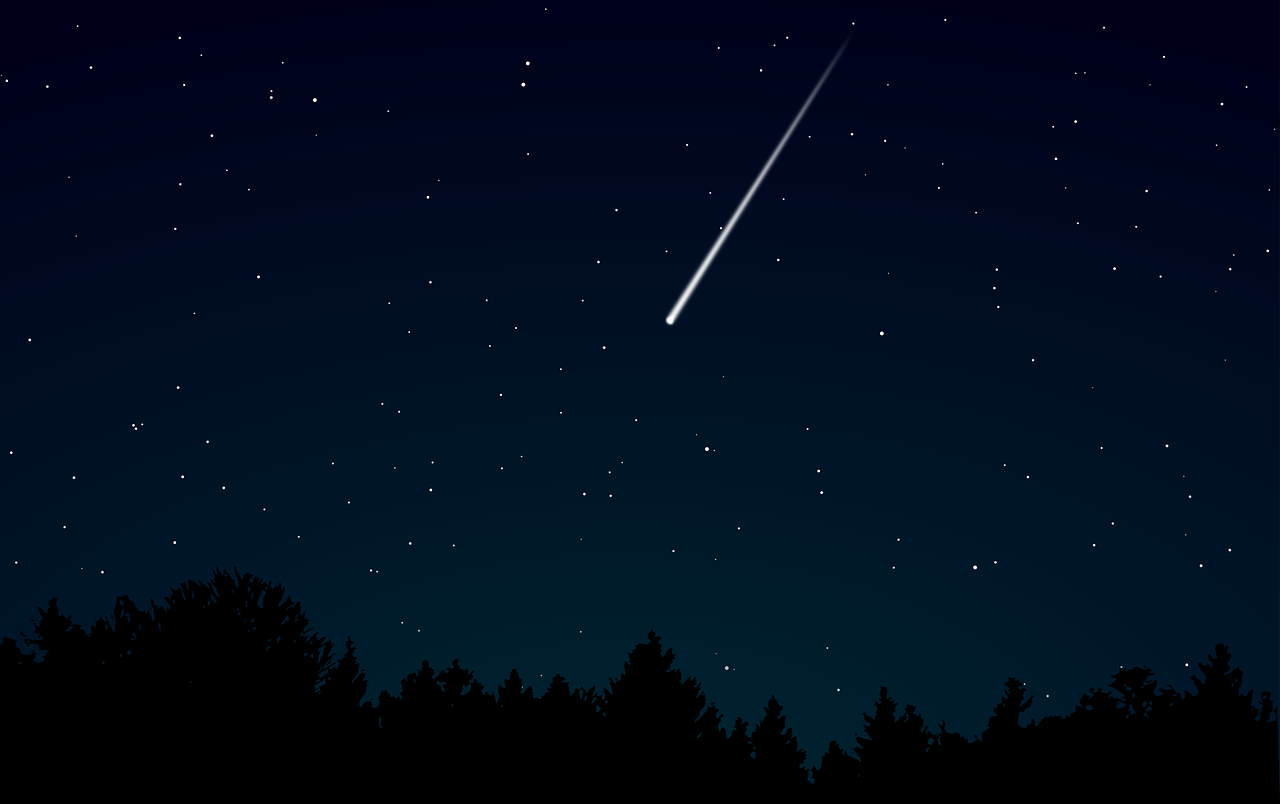
On the night of December 14, the most prolific meteor shower of the year—the Geminids—will reach its peak. Away from the distracting light of larger settlements, experts expect up to 150 shooting stars per hour between 10 p.m. and 6 a.m.
According to the Vienna Working Group for Astronomy (WAA), the spectacle will reach its peak around December 14. But even on the nights that follow, you can still see meteoroids burning up in the sky, provided the sky is clear. The period of visibility generally lasts from December 4 to December 20, with the best viewing likely to be on December 17.
The Geminids occur annually between December 4 and 20, with their peak activity this year occurring on the night of December 13 to 14. According to the WAA, up to around 150 meteors, which will light up for a few seconds, mainly in an easterly direction, will streak across the night sky every hour.
Near-Earth asteroid Phaeton as the cause The Geminid meteor shower is caused by the near-Earth asteroid (3200) Phaethon, once a stately comet with an ice and dust shell. However, these outer layers, which are responsible for the sometimes impressive appearance of comets, have long since been lost. What remains is the solid core of Phaethon, which continues to orbit the sun.
Tiny particles visible as meteors. Every time the Earth crosses Phaethon’s debris trail on its orbit, small particles (known as meteoroids) enter the atmosphere, burn up due to friction, and are visible as shooting stars (meteors).
In a dark observation location, the chances of seeing many shooting stars are excellent. Incidentally, the twins (Latin: gemini) with their bright main stars Castor and Pollux were the inspiration for the name of the Geminid swarm, because the shooting stars appear to fall from exactly this direction.
Up to 150 shooting stars per hour this year
The activity of the Geminids has increased steadily over the past decades, and according to experts, there will be around 150 this year. The Geminids are particularly impressive because they produce many bright, typically yellowish-white meteors, which, unlike other meteors, can also be observed quite well in the evening hours.
This year’s situation certainly promises a lot: “In all likelihood, they will provide the most impressive meteor shower of 2025,” according to the WAA website.
- source: krone.at/picture: Image by OpenClipart-Vectors from Pixabay



This post has already been read 27519 times!