 0
0
 0
0
Magnifica humanitas is Pope Leo XIV’s first social encyclical and the Catholic Church’s most comprehensive response yet to the ethical, social, and spiritual challenges posed by artificial intelligence. At its core, the document is a forceful affirmation of the grandeur of the human person and a warning that technological power—if left unchecked—can erode dignity, justice, and peace.
Central Insight: Human dignity must remain the measure of all technological progress
Pope Leo XIV frames AI as a decisive turning point in human history, comparable to the Industrial Revolution that inspired Rerum novarum in 1891. Just as Leo XIII confronted the upheavals of industrialization, Leo XIV confronts the digital revolution: algorithms that shape social life, autonomous weapons, and systems capable of excluding the vulnerable from healthcare, employment, or security. Vatican
The encyclical insists that technology is not inherently hostile to humanity, but it is never neutral. It reflects the values of those who design, regulate, and deploy it. Therefore, the Church calls for vigilance, moral discernment, and a renewed commitment to the common good. Vatican News
🧭 Key Themes and Contributions
Human dignity
The encyclical grounds its entire argument in the Christian understanding of the human person as created in the image of the Triune God. This theological anthropology becomes the lens through which AI must be evaluated. Any system that undermines equality, freedom, or the capacity for relationship violates this dignity. Vatican
A call to “disarm” AI
One of the most striking formulations is the Pope’s call to “disarm artificial intelligence.”
This does not mean rejecting technology; it means stripping AI of logics of domination, exclusion, and war. The Pope draws a parallel with nuclear disarmament: great technological power must be accompanied by great moral responsibility.
Truth and communication
The encyclical warns of a digital ecosystem where misinformation, polarization, and algorithmic manipulation distort public discourse. Pope Leo XIV calls for an “ecology of communication” that protects truth as a common good.
Work and economic justice
AI’s impact on labor—automation, unemployment, and new forms of precarity—is treated with urgency. The Pope insists that work is not merely economic but a path to human flourishing, and therefore societies must ensure that technological transitions do not sacrifice workers’ dignity.
Social doctrine in continuity
The encyclical situates itself within the long arc of Catholic social teaching, from Leo XIII to Vatican II to Francis. It emphasizes that the Church’s social doctrine is not a static rulebook but a “theology of communion in history” that must continually interpret new realities in light of the Gospel.
A Prophetic Warning: The New “Tower of Babel”
The Pope opens with a stark choice:
Humanity can either build a new Tower of Babel—an AI-driven world of power concentration and dehumanization—or a city where God and humanity dwell together.
This biblical framing is not rhetorical flourish; it is a moral diagnosis. AI can either deepen solidarity or accelerate fragmentation. It can serve the vulnerable or entrench injustice.
A Pastoral Tone Rooted in Listening
Pope Leo XIV emphasizes that Magnifica humanitas was born from listening—to scientists, engineers, policymakers, teachers, parents, and especially those harmed by unjust algorithms or threatened by autonomous weapons. This listening leads to a “disturbing conviction”: without ethical governance, AI will generate new forms of exclusion and suffering.
Toward a Civilization of Love
The final chapter calls for a civilization of love in the digital age. This includes:
- resisting the culture of power and domination
- protecting peace in an era of AI-enabled warfare
- reviving diplomacy and multilateralism
- adopting the perspective of victims
- disarming words as well as weapons
The encyclical ends with a Christological reminder: the Word became flesh. True human greatness is not found in surpassing our limits through technology but in embracing our relational, embodied, God-given humanity.
Why Magnifica humanitas Matters
This encyclical is not merely a Church document; it is a global ethical intervention. It offers:
- a moral framework for AI governance
- a critique of technocratic power
- a vision of human-centered progress
- a call to solidarity in a fragmented world
It is, in many ways, the first major magisterial attempt to articulate a Christian humanism for the algorithmic age.
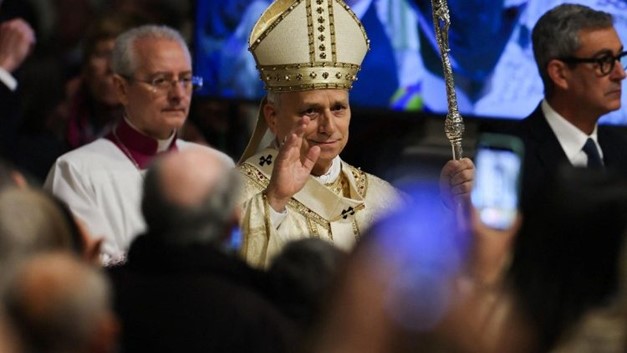
- Hectort Pascua with reference from Presentation and promulgation of the Encyclical Letter “Magnifica humanitas” (25 May 2026)/picture: vatican.va



This post has already been read 4840 times!