 0
0
 0
0
A striking shade of purple is making its way into Austria’s cafés, dessert counters and social-media feeds. The ingredient behind the trend is ube, the naturally violet yam from the Philippines that is increasingly appearing in everything from lattes and cheesecakes to ice cream.
The recent Treffpunkt Österreich zu Mittag segment, “Ube: Die lila Knolle im Trend-Check,” takes a closer look at the ingredient behind the growing culinary trend. According to the programme, purple is becoming an increasingly popular colour in gastronomy, with ube at the centre of the phenomenon.

4
From Filipino kitchens to Austrian cafés
For Filipinos, however, ube is anything but a new discovery.
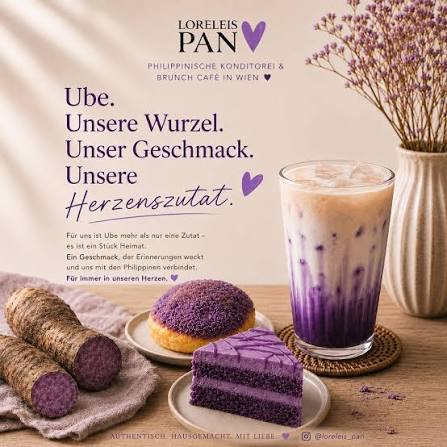
Ube, botanically known as Dioscorea alata, is a purple yam that has long been part of Philippine cuisine. It is particularly familiar in desserts, where its distinctive colour and mild, naturally sweet flavour have made it a favourite ingredient for generations.
Traditionally, ube is used in ube halaya, a rich purple yam spread, as well as in cakes, ice cream, rice-based sweets and the popular Filipino dessert halo-halo. The ingredient’s natural purple colour comes from plant pigments called anthocyanins.
What is changing is not ube itself, but its audience.
As the Austrian programme highlights, the ingredient is increasingly moving beyond Filipino restaurants and specialty shops and into the wider café and dessert scene. Ube lattes, cheesecakes and ice cream are helping introduce the purple yam to customers who may never have encountered it before.
What does ube taste like?
Its spectacular colour may be the first thing people notice, but ube’s flavour is what keeps many customers coming back.
Descriptions commonly include mildly sweet, nutty and earthy notes with a subtle vanilla character. This relatively gentle flavour profile makes ube particularly suitable for desserts and drinks.
That versatility is one reason cafés have been experimenting with it. Ube can be incorporated into milk-based drinks, pastries, creams, cakes and ice cream while providing its characteristic violet colour.
Unlike artificial food colouring, the colour comes naturally from the yam itself.
More than an Instagram trend
The visual appeal of ube is undoubtedly an important part of its recent popularity. A bright purple latte or slice of purple cheesecake stands out immediately in photographs and videos, making the ingredient particularly suited to Instagram and TikTok culture.
But reducing ube to a social-media phenomenon overlooks its cultural background.
For Filipinos, ube represents a familiar taste of home. It is associated with celebrations, family gatherings and traditional desserts. Its sudden popularity abroad therefore creates an interesting situation: something deeply rooted in Filipino food culture is being rediscovered by an international audience as the latest food trend.
The same pattern has happened with other Asian ingredients. Matcha, for example, moved from a traditional Japanese context into cafés and bakeries around the world. Ube is now following a similar path, although with its own distinctive Filipino identity.
Austria discovers the “purple yam”
The ube trend has already become visible in Vienna. Austrian media have reported growing interest in ube-based drinks and desserts, including cafés and Filipino establishments experimenting with the ingredient.
One Vienna example is Lorelei’s Pan, where Filipino-Austrian pastry creations have incorporated ube into Austrian favourites. The café’s owner, Camille Lorelei Sable, has described combining Austrian classics with Filipino flavours, including an ube version of Kaiserschmarrn.
Such creations illustrate an important aspect of the trend: ube is not simply being imported into Austria unchanged. It is also becoming part of a culinary exchange, where Filipino ingredients meet Austrian traditions.
A taste of Filipino culture
The growing popularity of ube offers something beyond another fashionable café ingredient. It provides an opportunity for people in Austria to discover an element of Filipino culture through food.
For the growing Filipino community in Austria, seeing ube appear on mainstream menus can also be a small but meaningful form of cultural recognition. What Filipino families have enjoyed for generations is now attracting a much wider audience.
And perhaps that is the most interesting part of the purple-food phenomenon. Ube may be trending today, but the tradition behind it is centuries old.
From a familiar ingredient in Filipino kitchens to an eye-catching latte in an Austrian café, the journey of ube shows how food can cross borders while carrying stories, memories and cultural identity along with it.
The purple wave has arrived in Austria—and for many Filipinos, it tastes a little like home.
A Cultural Bridge on a Plate
The rise of Ube in Vienna is more than a food fad. It reflects a growing curiosity about Filipino cuisine and a desire among migrants to share their culinary heritage. For Sable, who was born in the Philippines, the trend carries personal meaning.
It’s a way of bringing a piece of home to her adopted country—and inviting Austrians to experience it with her.
As Ube continues to color the city’s dessert scene, one thing is clear: Vienna is ready for a little more purple on its plate.
More Information: Address: Cafe Lorelei’s Pan
Sebastian-Kelch-Gasse 4/1/r1, 1140 Wien
Menu: loreleispan.com/ (3) Facebook
Source: “Treffpunkt Österreich zu Mittag – Ube: Die lila Knolle im Trend-Check,” Joyn/ATV. The Joyn programme describes ube as a Philippine yam increasingly used in lattes, cheesecake and ice cream.



This post has already been read 19417 times!