 0
 0
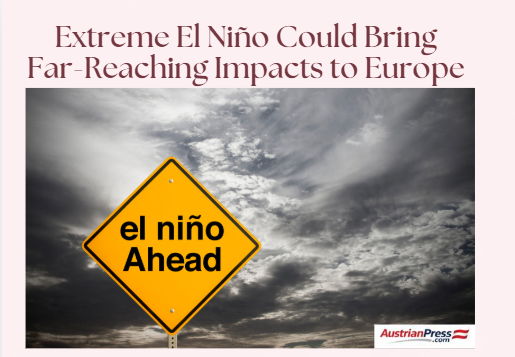
An exceptionally powerful El Niño event is currently reshaping weather patterns across the globe, with climate scientists warning that its effects could extend well beyond the Pacific region and influence conditions in Europe over the coming months and years.
According to Austrian climate researcher Gottfried Kirchengast of the Wegener Center at the University of Graz, the current El Niño may be the strongest recorded since reliable observations began in the 1950s. Analysis of historical climate data preserved in coral records even suggests that the event could be unmatched for around a thousand years.
A climate phenomenon with global reach
El Niño is a naturally occurring climate pattern that typically develops every two to seven years when sea surface temperatures in the central and eastern tropical Pacific Ocean become unusually warm.
Under normal conditions, trade winds push warm surface waters westward across the Pacific. When these winds weaken, warm water shifts eastward toward the coast of South America, altering atmospheric pressure systems, wind circulation, and rainfall patterns worldwide.
The consequences can be dramatic. Parts of Southeast Asia, southern Africa, and northern South America often face an increased risk of severe drought during El Niño years. At the same time, heavy rainfall, flooding, and landslides can affect western South America and parts of East Africa.
Food security concerns for millions
The humanitarian implications could be significant. The United Nations World Food Programme estimates that by the end of 2027, at least 49 million additional people in 45 vulnerable countries could experience acute food insecurity as a result of the ongoing El Niño event.
Failed rainy seasons and reduced agricultural production are among the most pressing concerns. Scientists note that the impacts of El Niño can persist long after the phenomenon itself has reached its peak.
In response to the unusual development, the World Meteorological Organization (WMO) has expanded early-warning efforts. Forecasts suggest that the current El Niño episode could continue influencing global climate conditions through mid-2027.
Could Europe feel the effects?
Although El Niño originates in the Pacific Ocean, its influence can extend across the globe through changes in large-scale atmospheric circulation patterns.
Kirchengast says the phenomenon may affect the jet stream, a powerful high-altitude air current that plays a key role in shaping European weather. Seasonal forecasts currently indicate a tendency toward warmer and drier conditions from winter into spring.
Given the exceptional strength of the current event, researchers believe some after-effects could even persist into the European summer. However, scientists caution that it remains impossible to reliably predict exactly how strongly individual regions, including Austria and the Alpine region, will be affected.
Economic consequences could also reach Europe. Crop failures and infrastructure damage in other parts of the world may disrupt global supply chains and international trade, potentially affecting prices and availability of goods.
Global temperatures could approach 1.8°C of warming
Researchers are also closely monitoring El Niño’s impact on global temperatures.
As the Pacific releases additional stored heat into the atmosphere, global average air temperatures temporarily rise. This natural warming effect is occurring alongside the long-term trend of human-induced climate change.
Kirchengast and fellow researcher Moritz Pichler estimate that global warming could reach around 1.65 degrees Celsius above pre-industrial levels in 2026. By 2027, the figure could rise to approximately 1.8 degrees Celsius, with El Niño potentially contributing up to 0.25 degrees of that increase.
Scientists stress that a single year exceeding a particular threshold does not automatically mean the long-term goals of the Paris Climate Agreement have been permanently breached. Climate targets are assessed over longer periods rather than individual years.
Climate change and El Niño may reinforce each other
Researchers are also examining whether human-caused climate change could be making El Niño events more frequent or more intense.
Historical climate records and model simulations indicate that global warming may increase the likelihood of stronger El Niño episodes in the future. If confirmed, this would create a feedback effect in which El Niño temporarily boosts global temperatures while long-term warming strengthens future El Niño events.
Although many questions remain unresolved, scientists agree that the combination of an extraordinarily strong El Niño and ongoing global warming presents major challenges for climate research and adaptation efforts.
With potential impacts ranging from extreme weather and food shortages to higher global temperatures and economic disruptions, the consequences of the current El Niño could continue to be felt long after the event itself has ended.
- source: vienna.at/picture: canva.com



This post has already been read 17 times!