 0
 0
President Alexander Van der Bellen calls on Austrians to defend democracy, resist division and remember that “together, things work better.”
VIENNA, October 26, 2026 — Every year on October 26, Austria celebrates its National Day, a day dedicated to the country’s independence, freedom and permanent neutrality. Across the nation, Austrians commemorate the restoration of their sovereignty after the Second World War and reflect on the values that have shaped the Second Republic: democracy, peace, solidarity and the ability to overcome differences through dialogue.
Beyond the public ceremonies, military displays and open doors at government institutions, the National Day carries a profound historical meaning. It marks Austria’s determination to shape its own future after years of Nazi dictatorship, war and foreign occupation.
This year, the message of Federal President Alexander Van der Bellen places particular emphasis on the importance of national unity, public trust and resilience in a world increasingly challenged by disinformation, cyberattacks and attempts to undermine democratic societies.
In his National Day letter, published in the Austrian newspaper Kronen Zeitung, the President reminds citizens that Austria’s neutrality remains an important national asset, but it cannot, by itself, protect the country from every threat.
“Our neutrality is a valuable asset. But it is not a shield behind which we can hide,” he writes, calling for a defence-ready Austrian Armed Forces, a resilient economy, independent energy supplies and reliable partners in Europe.
Above all, he stresses, Austria needs its people to stand together.
October 26: The historical meaning of Austria’s National Day
The origins of the National Day date back to the end of the Second World War and the struggle to restore Austria’s independence.
Following the defeat of Nazi Germany in 1945, Austria was occupied by the four Allied powers: the United States, the United Kingdom, France and the Soviet Union. The country remained under Allied occupation for ten years, while the political foundations of an independent Austrian state were gradually rebuilt.
A decisive turning point came on May 15, 1955, when Austria signed the State Treaty at Vienna’s Belvedere Palace. The treaty restored Austria’s sovereignty and established the framework for the withdrawal of foreign occupation forces.
The last foreign troops were required to leave Austria by October 25, 1955. The following day, October 26, the Austrian National Council adopted the Federal Constitutional Law on the country’s permanent neutrality.
Austria’s National Day therefore commemorates the restoration of the nation’s freedom and its ability to determine its own political future. The date became the country’s official National Day in 1965.
Since then, October 26 has served not only as a public holiday but also as an occasion to reflect on the responsibilities that accompany independence.
Remembering the past, protecting the future
In his letter, President Van der Bellen encourages Austrians to look beyond the familiar National Day traditions and remember the historical experiences that made the country’s freedom possible.
He recalls the dark path that preceded the Second Republic: the dehumanisation of neighbours, denunciations, humiliation, violence and war, culminating in the Holocaust — the systematic persecution and murder of six million Jews by Nazi Germany and its collaborators.
Austria’s own historical responsibility remains an essential part of this remembrance. Many Austrians participated in or supported Nazi crimes, while others suffered persecution or resisted the regime.
The President also refers to accounts of people who, despite having been bitter enemies before their imprisonment in Nazi concentration camps, came to recognise a shared responsibility to prevent such hatred from returning.
Their message, as he recounts it, was simple: “Never again. Never again against one another.”
For Van der Bellen, this commitment is closely connected to the spirit of compromise that helped Austria rebuild itself after the war.
The Second Republic did not become one of the world’s most secure and liveable countries because all its citizens always agreed. Rather, it progressed because people and political parties repeatedly found ways to work together despite their differences.
Ten years of occupation, followed by decades on the Iron Curtain dividing Europe, tested the young republic. Yet Austria gradually developed into a stable democracy with a strong social partnership and a high standard of living.
The lesson, the President suggests, is that national strength depends not on uniformity of opinion but on the willingness to find common ground.
Neutrality in a changing world
Austria’s permanent neutrality has long been a defining element of its national identity and foreign policy. It is also a source of international recognition, reflecting the country’s commitment to peace, diplomacy and peaceful coexistence.
However, Van der Bellen warns that neutrality must not be mistaken for immunity from modern threats.
In his letter, he points to attacks that do not arrive in the form of tanks or soldiers but instead target the foundations of society through digital channels. These include deliberate disinformation, cyberattacks against hospitals, municipalities and businesses, and efforts to weaken Austria’s economy or make the country dependent on others.
“The intention behind them is always the same,” the President warns: to divide people, create uncertainty and destroy trust between citizens.
Such challenges, he argues, cannot be addressed by neutrality alone. Austria must invest in its own security, strengthen its economic resilience, safeguard its energy supply and maintain dependable partnerships in Europe.
The President’s message is a reminder that neutrality does not mean indifference to international developments or freedom from responsibility. In an interconnected world, national security also depends on preparedness, cooperation and the resilience of democratic institutions.
The power of compromise
One of the central themes of Van der Bellen’s National Day message is the importance of compromise — a principle he regards as one of the foundations of Austria’s post-war success.
Compromise may not always appear exciting. It can be mistaken for weakness, indecision or simply settling for less. Yet the President argues that it requires strength, respect and the willingness to recognise another person’s perspective.
“A compromise is not a sign of weakness. It is a sign of strength,” he writes, explaining that reaching an agreement demonstrates that we take others seriously.
This principle, he says, applies to every part of Austrian society: politics, business, local communities, voluntary organisations and family life.
Political leaders should spend more time talking with one another rather than talking about one another. Businesses can move forward through cooperation and confidence rather than constant pessimism. Communities become stronger through the commitment of firefighters, associations, volunteers and neighbours who contribute to the common good.
Even conversations around the family table matter.
In an era of polarisation, online hostility and declining trust in public institutions, this appeal carries significance beyond Austria’s borders. It highlights a universal democratic principle: societies remain resilient when citizens are willing to listen, disagree respectfully and work towards shared solutions.
A National Day for everyone
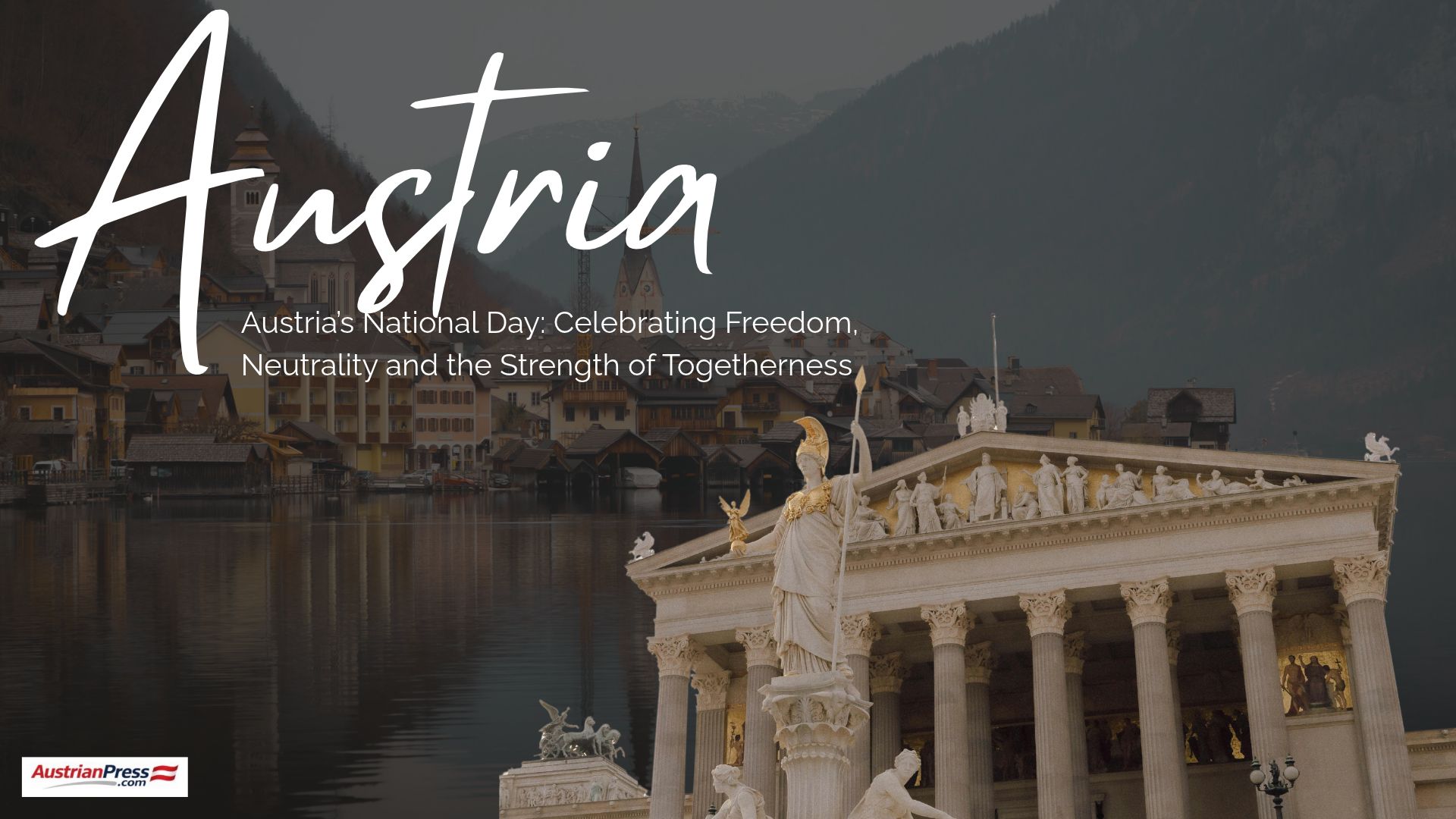
October 26 is traditionally marked by official ceremonies, public events and opportunities to visit important government institutions. On Vienna’s Heldenplatz, visitors can experience displays involving the Austrian Armed Forces, while the Hofburg, Parliament, the Federal Chancellery and various ministries open their doors to the public.
These activities offer citizens an opportunity to learn more about their country’s institutions, history and democratic responsibilities.
For families, young people and visitors, the National Day can also serve as an introduction to Austria’s political development and the values underlying its constitutional order.
For Austria’s international community, including the many people who have made the country their home, the day offers an opportunity to better understand the historical experiences that continue to shape Austrian society. The principles of freedom, mutual respect, democratic participation and peaceful coexistence are relevant to everyone who contributes to the country’s future.
National identity, in this sense, is not simply about remembering the past. It is also about deciding what kind of society people want to build together.
Freedom comes with responsibility
Van der Bellen concludes his message with a call to remember what October 26 truly represents: the freedom to make decisions independently and the responsibility to use that freedom wisely.
His appeal is particularly relevant at a time when democratic societies face pressure from misinformation, international instability and growing divisions within their own populations.
Austria’s experience demonstrates that peace and prosperity cannot be taken for granted. They require strong institutions, historical awareness, public participation and a willingness to protect the trust that binds people together.
As the country celebrates its National Day, the President’s message extends beyond flags, ceremonies and a day off work. It calls on every citizen to recognise that the strength of a nation depends not only on its military capabilities, economic resources or international partnerships, but also on the character of its society.
“Miteinander geht es besser. Immer.” — “Together, things work better. Always.”
These closing words capture the spirit of Van der Bellen’s message and the enduring significance of Austria’s National Day: freedom is a historic achievement, neutrality is a responsibility, and unity is a task that must be renewed every day.
On October 26, Austria celebrates not merely the restoration of its sovereignty in 1955, but also the continuing responsibility to preserve democracy, uphold human dignity and build a future in which differences do not become divisions.
President Alexander Van der Bellen’s National Day letter: The key message
The following is an English rendering of the central message of the President’s letter published in Kronen Zeitung for Austria’s National Day:
“I wish you a happy National Day! May I ask you a simple question today? What are we actually celebrating on October 26?
Behind the public holiday and the familiar traditions lies something much more important. In May 1955, the State Treaty was signed. The commitment to neutrality was part of this agreement. By October 25, the last foreign soldiers had to leave our country. The following day, October 26, the National Council adopted the Neutrality Act.
This is the essence of the day: Austria was once again able to decide its own future, independently of the occupying powers.
This day of freedom and self-determination came at the end of a very dark journey. Before it came hatred, the ridicule and dehumanisation of neighbours, denunciations and humiliation. These developed into violence and war, and ultimately the Holocaust, the greatest crime against humanity, for which many Austrians also bore responsibility.
In that dark period, people who had previously fought bitterly against one another also encountered each other in the camps. On the camp road, so the story goes, they swore to one another: Never again. Never again against one another.
They also discovered something that would later become a recipe for success for the Second Republic: compromise. Talking to one another. Listening to one another. Searching for solutions together, even when it is difficult. Especially then.
Why am I telling you all this today? Because I am convinced that we need this recipe for success more urgently than ever.
We are experiencing attacks that do not come with tanks. They come through our screens and mobile phones, through deliberate false reports, cyberattacks on hospitals, municipalities and businesses, and attempts to undermine our economy and make us dependent.
The intention behind them is always the same: to divide us, drive us apart, unsettle us and make us stop trusting one another. And these threats do not come from just one direction.
I say this without panic, but with great seriousness. Our neutrality is a valuable asset. But it is not a shield behind which we can hide. We need armed forces ready to defend our country, a resilient economy, an independent energy supply and reliable partners in Europe.
But above all, we need one another.
A society that stands together cannot be divided so easily. This applies to politics, where we should talk more with one another instead of about one another. It applies to our economy, where we can progress only together. It applies to our communities, our fire brigades, our associations, our neighbours and our families.
Do not underestimate compromise. A compromise is not a sign of weakness. It is a sign of strength and proof that we take the other person seriously.
We Austrians are capable of doing this. We have proved it often enough.
So, as you enjoy our National Day and your day off, please take a moment to remember what this day stands for: the freedom to make our own decisions, but also the responsibility to use that freedom wisely.
It stands for the promise of ‘Never again’ and for a simple insight that has made our country strong and will continue to make us strong in the future:
Together, things work better. Always.
I wish you a happy National Day!
Alexander Van der Bellen
Federal President of the Republic of Austria
Editorial note: The letter above is an English rendering of selected passages and the principal arguments in the German original supplied for this article, rather than a certified, word-for-word translation of the entire letter.
- Hector Pascua with reference from krone.at/picture: canva.com



This post has already been read 40 times!