 0
0
 0
0
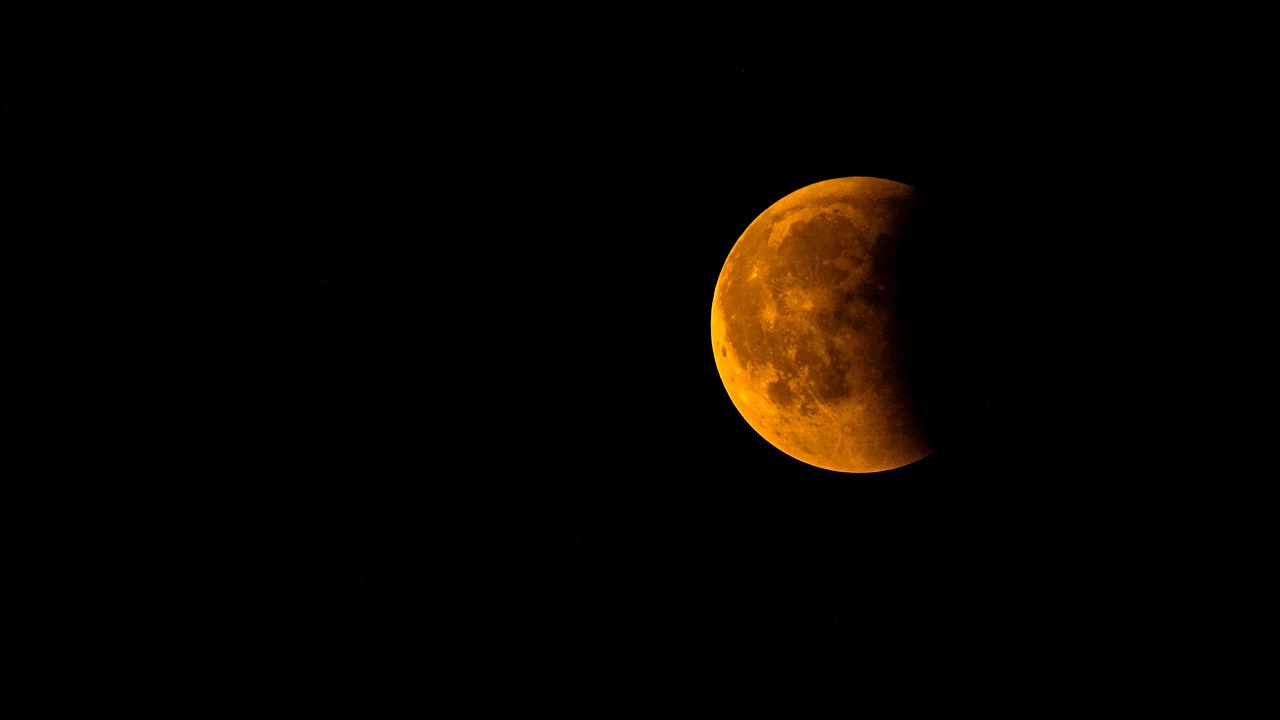
August 28, 2026 – Skywatchers are in for a rare celestial spectacle on Friday morning as a deep partial lunar eclipse unfolds just weeks after a partial solar eclipse. Although this event will not produce a full “blood moon,” astronomers say it offers a remarkable viewing opportunity with an unusual twist: the eclipse reaches its peak at the exact moment the Moon sets below the horizon.
The maximum phase of the eclipse is expected at 6:13 a.m., when nearly 93 percent of the Moon’s visible surface will be immersed in Earth’s umbral shadow, the darkest part of the planet’s shadow cone. For observers, the challenge will be timing. The eclipse peak coincides with moonset, meaning anyone hoping to witness the event will need an unobstructed view toward the western horizon and an early start to the day.
A Dramatic Morning Sky Show
As the Moon gradually enters Earth’s shadow during the early morning hours, a large portion of its bright surface will darken. The event comes shortly after a partial solar eclipse, creating a rare period of heightened astronomical activity.
Because the Moon sets during the eclipse’s most dramatic phase, observers may see the lunar disk partially darkened and tinted with subtle reddish or copper hues before it disappears below the horizon. Weather conditions and local visibility will play a crucial role in determining how much of the spectacle can be seen.
Waiting for the Next True Blood Moon
For those hoping to witness a fully red Moon, patience will be required. According to astronomical forecasts, the next total lunar eclipse visible as a true blood moon will occur on December 31, 2028.
During a total lunar eclipse, the Moon does not vanish completely. Instead, it often glows in shades ranging from orange to deep copper red. This striking color transformation has fascinated observers for centuries and is one of the most dramatic sights in the night sky.
The Science Behind Lunar Eclipses
Despite their mystical appearance, lunar eclipses are the result of precise celestial mechanics.
A lunar eclipse occurs when the Sun, Earth, and Moon align in a straight line, with Earth positioned between the Sun and the Moon. In this configuration, Earth casts a long shadow into space. When the Moon passes through this shadow, a lunar eclipse takes place.
While the concept sounds straightforward, eclipses do not happen every time there is a full Moon.
Why Eclipses Are Relatively Rare
The reason lies in the Moon’s orbit. The lunar orbit is tilted by approximately 5.1 degrees relative to the plane of Earth’s orbit around the Sun, known as the ecliptic.
As a result, the Moon usually passes above or below Earth’s shadow during a full Moon, sometimes missing it by as much as 37,000 kilometers (23,000 miles). An eclipse can only occur when the full Moon is near one of the two points where its orbit crosses the ecliptic plane. These locations are known as orbital nodes.
Because this precise alignment is required, lunar eclipses occur only about two to three times per year worldwide.
How to Watch
Anyone planning to observe Friday’s eclipse should:
- Look toward the western horizon before sunrise.
- Choose a location with a clear, unobstructed view.
- Arrive early to allow time for the Moon to climb into view above buildings, trees, or hills.
- Bring binoculars for a closer look, though no special equipment is required.
Although the event falls just short of a total lunar eclipse, the combination of a deeply shadowed Moon and the perfectly timed moonset makes this one of the most unusual astronomical events of the year.
For early risers and sky enthusiasts, Friday morning’s eclipse promises a memorable glimpse of the intricate choreography of the solar system.
- source: oe24.at/picture: pixabay.com



This post has already been read 19963 times!