 0
0
 0
0
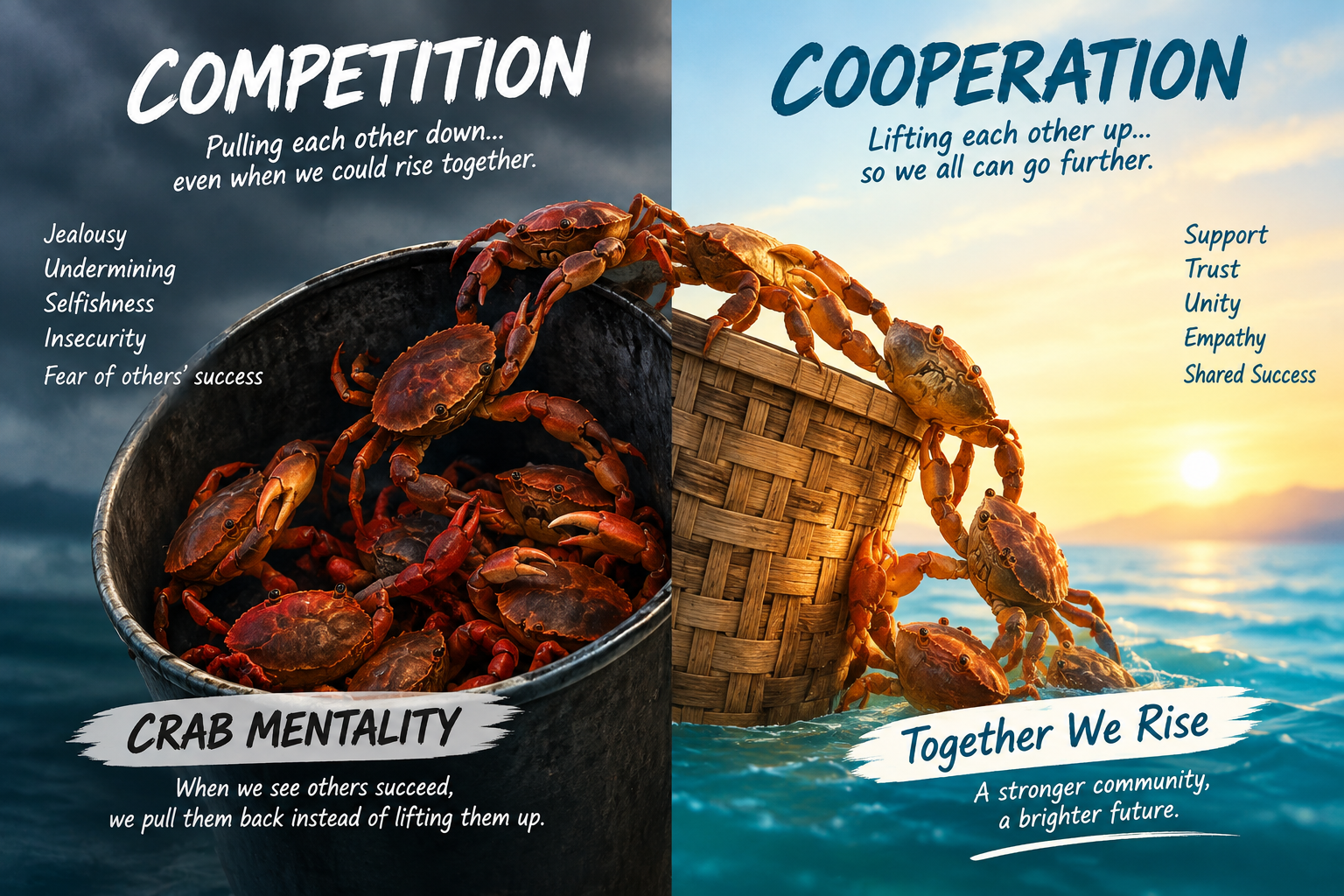
Crab mentality—the socio-cultural phenomenon where individuals actively sabotage the success or advancement of a peer, much like crabs in a bucket pulling down any compatriot trying to escape—remains one of the most persistent and deeply scrutinized traits in Filipino society. Often invoked in casual conversations, corporate post-mortems, and social commentary, it acts as a mirror reflecting the anxieties, scarcity mindsets, and historical wounds embedded within the national psyche.
Roots in Scarcity and Survival – Anthropologists and sociologists trace the origins of this behavior not to inherent malice, but to historical structures of survival. During centuries of colonial rule under Spanish and American administrations, followed by periods of intense economic volatility, Filipinos learned to navigate systems engineered for resource scarcity. When opportunities are artificially bottlenecked and survival feels precarious, the success of a neighbor or coworker can subconsciously register as a direct threat to one’s own precarious footing. In tightly knit agrarian or provincial communities, standing out was historically dangerous; conformity ensured social protection, while individual ambition risked drawing unwanted scrutiny or destabilizing the communal equilibrium.
Manifestations in Modern Spaces – In contemporary life, crab mentality mutates to fit modern environments, operating subtly in workplaces, political arenas, and even online communities.
- The Office Dynamic: Highly qualified professionals are frequently undermined by colleagues through gossip, withholding crucial information, or passive-aggressive resistance, often driven by fear of being overshadowed for promotions.
- The “Crab Barrel” of Social Media: Viral success or personal triumphs are frequently met with online cynicism, nitpicking, and unprovoked skepticism, where strangers rush to invalidate achievements rather than celebrate them.
- The Talangka Mentality in Politics: Reform-minded leaders or progressive community initiatives often face systematic resistance not just from political opponents, but from constituents who weaponize tall poppy syndrome to level the playing field downward.
The Cultural Reckoning – Despite its prevalence, a powerful counter-movement is reshaping the narrative. A younger, globally connected generation of Filipinos is actively working to dismantle crab mentality by championing a culture of radical support, mentorship, and collective upliftment. Phrases like “angat sa hirap” (rising from poverty) are shifting away from individual hustle at the expense of others toward community-driven progress encapsulated by the growing ethos of bayanihan in the digital age.
When success is reframed as an expandable pie rather than a finite resource, the bucket loses its lid. Overcoming this cultural shadow requires a conscious pivot from zero-sum thinking to institutional transparency, proving that a society rises fastest when it stops pulling down the hands reaching for the rim.
How have you personally navigated or observed crab mentality in your own professional or social circles?
- Hector Pascua/picture: chatgpt.com



This post has already been read 5140 times!